

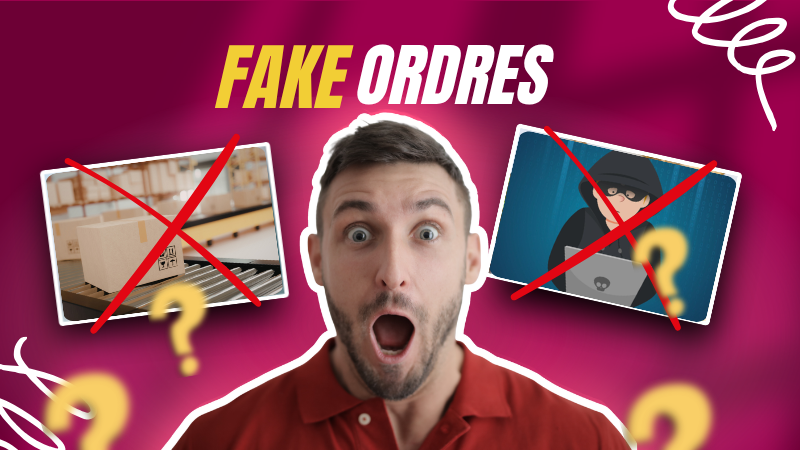
You're running Facebook ads. You're getting orders. But your delivery rate is stuck at 35% and your return rate is climbing. The most likely culprit: fake orders.
In Morocco's COD e-commerce market, fake orders are endemic. Industry estimates suggest that 20–40% of COD orders placed through Facebook or Instagram ads are fake, abandoned, or placed without genuine purchase intent. The exact percentage depends on your niche, your ad targeting, and whether you have any filtering in place.
Understanding where these orders come from — and how to filter them systematically — is one of the most valuable things you can do for your margins.
What Are Fake COD Orders?
A "fake order" is any order placed on a COD store that the customer never intends to pay for. This is made possible by the COD model itself: the customer pays nothing upfront, so there is zero financial risk to placing an order they don't want.
The term covers several different behaviors, each with different causes and solutions.
Types of Fake Orders in Moroccan E-commerce
1. Impulse / Accidental Orders
The most common type. A customer sees an ad, gets excited, clicks through and fills out the order form — and then immediately loses interest, forgets, or decides they don't actually want it. Because there was no payment, the order sits in your system looking real.
These customers typically don't answer confirmation calls, don't reply to WhatsApp, and eventually the order has to be abandoned or shipped into the void.
2. Curiosity / "What Happens" Orders
Some customers place COD orders purely to see what happens — out of curiosity about the process, the product, or to test a store they're not sure they trust. They have no intention of paying. These often show up as orders with incomplete addresses or orders where the customer is happy to talk during confirmation but then isn't home at delivery.
3. Competitor Sabotage
A well-known but rarely discussed problem in Moroccan e-commerce: competitors placing fake orders to drain your ad budget, inflate your return rate, and waste your team's time. These orders often come in bulk with suspicious patterns — similar phone numbers, same city, same products, same time window.
4. Reseller / Dropshipper Testing
Other sellers testing your product, price, or fulfillment process by placing small orders. They often confirm when called (to get the product), which makes them harder to filter — but they represent real losses if not managed.
5. Children and Accidental Submissions
Especially relevant for ads targeting broad audiences: children using a family member's phone, or adults accidentally tapping through an ad and submitting the form without realizing it. These tend to confirm as confused or surprised when called.
The Real Cost of Fake Orders
Beyond the obvious cost of returned parcels, fake orders have several cascading effects on your business:
- Ad budget waste: You paid for every fake click that turned into a fake order. Facebook optimizes for conversions — if your "conversions" are 30% fake, your algorithm is optimizing for fake customers
- Confirmation agent time: Every fake order requires 5–15 minutes of your team's time across multiple contact attempts
- Inventory inaccuracy: Fake orders that aren't filtered quickly can tie up stock in a pending state
- Carrier relationship: High return rates with carriers can affect your service terms and pickup priority
- Team morale: High fake order rates are demoralizing for confirmation agents who do the work of chasing unresponsive customers
How to Detect Fake Orders Before Spending Resources
There are several reliable signals that an order is likely fake:
Phone Number Patterns
- Phone numbers that don't match Moroccan format (0612345678, 0712345678, etc.)
- Phone numbers previously blacklisted from other fake orders
- Multiple orders with sequential or near-identical phone numbers in a short time window
Address Quality
- Completely empty address fields
- Single-word addresses like "Casablanca" or "Maroc" with no street detail
- Copy-paste patterns where multiple orders share identical addresses
Behavioral Signals
- Orders placed at 2–4 AM (less likely to be genuine purchase intent)
- Multiple orders from the same IP address or device fingerprint in a short window
- Extremely high order values that don't match the traffic source demographics
Response During Confirmation
- No answer on 5+ attempts across 2 days is a strong fake signal
- Customer answers but denies placing the order
- Customer seems confused, says a child placed it, or asks you to cancel
- Customer confirms but gives a completely different address than the one provided
Filtering Fake Orders Before Shipping
The goal is simple: never ship an unconfirmed order. This single rule eliminates the majority of fake order losses instantly.
A confirmed order is one where a real human has answered your call, verbally confirmed the product and amount, and verified their address. This confirmation acts as a filter that separates genuine buyers from fake orders, abandoned carts, and impulse clickers.
Orders that cannot be confirmed after a full 3-day, 5-attempts/day cycle should be marked as abandoned — not shipped. Shipping unconfirmed orders "hoping for the best" is statistically the worst financial decision you can make in COD e-commerce.
Building a Systematic Fake Order Filtering Process
A systematic approach combines confirmation, data tracking, and continuous improvement:
1. Require Confirmation Before Shipping
This is non-negotiable. No confirmed order = no shipment. Every order waits in a pending state until the customer has been reached and confirmed.
2. Maintain a Phone Number Blacklist
Every order that turns out to be fake, every customer who refuses delivery, and every customer who confirms but isn't home for multiple delivery attempts gets added to your blacklist. Future orders from these numbers are flagged automatically for extra scrutiny or rejected outright.
3. Score Orders at Receipt
Assign each incoming order a risk score based on the signals above: phone format, address quality, time of order, previous history. High-risk orders get prioritized for confirmation; orders with multiple risk signals can be deprioritized or flagged for manual review.
4. Track Fake Order Rate by Traffic Source
Not all traffic sources produce the same fake order rate. Facebook Broad audiences typically produce more fake orders than lookalike audiences. Instagram story ads may behave differently than feed ads. Track your fake rate by campaign, ad set, and creative to identify which sources are most polluted and adjust your spending accordingly.
5. Outsource to a Specialized Service
If managing confirmation and fake order filtering internally is consuming too much of your team's time, a specialized COD confirmation service handles the entire process — including blacklist management, risk scoring, and multi-channel contact attempts — so you can focus on growth rather than operations.
Stop losing orders to fake clicks and missed calls
MyLeadDone confirms every COD order by phone and WhatsApp — you only pay for delivered orders.
Start Free — 10 Orders